Planning a trip to Iran? Whether you’re curious about its ancient history, breathtaking geography, vibrant culture, or simply want to know what to expect before you go, this guide is the perfect place to start. Iran is a country of contrasts: snow-covered mountains and hot deserts, bustling modern cities and centuries-old villages, classical art and contemporary cinema. To truly enjoy your trip, it helps to understand the key things about the country before you travel.
In this blog post, we’ll break down the most important things to know. So you can plan with confidence and make the most of your time in Iran.
1) Geography Things to Know Before Traveling to Iran
In this section, we will discuss the main things to know about Iran map, nature, climate, cities, borders, roads & transportation system to have an idea about our country.
1-1) Iran Map
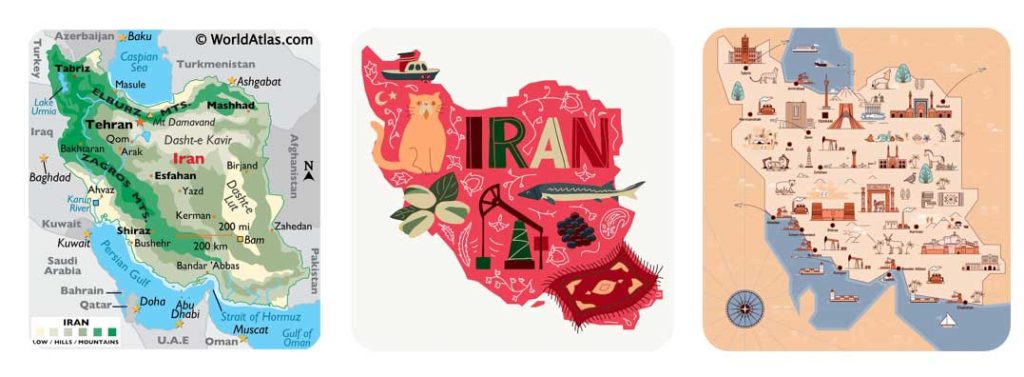
If you’ve ever Googled ‘Iran map,’ you’ve probably seen photos below. Up north, there’s the Caspian Sea. Down south, the Persian Gulf. And in between… a mix of mountains, deserts, and cities.
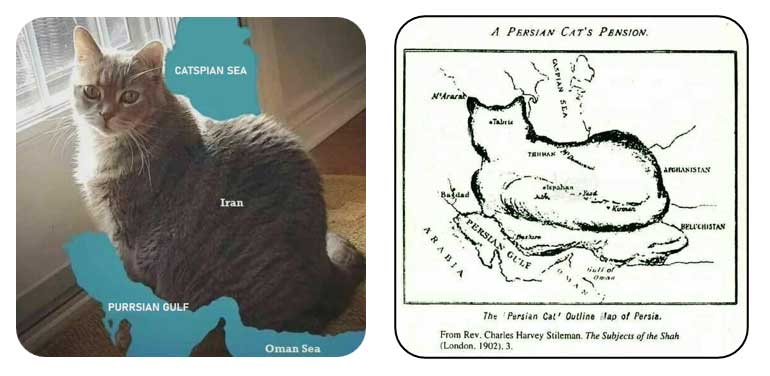
Fun fact — some people say Iran’s map looks like a cat, based on a historic illustration of the book “Subjects of the Shah or The Land of Persia” by Stileman, The Reverend Charles Harvey from way back in 1902.
1-2) Iran Country Size
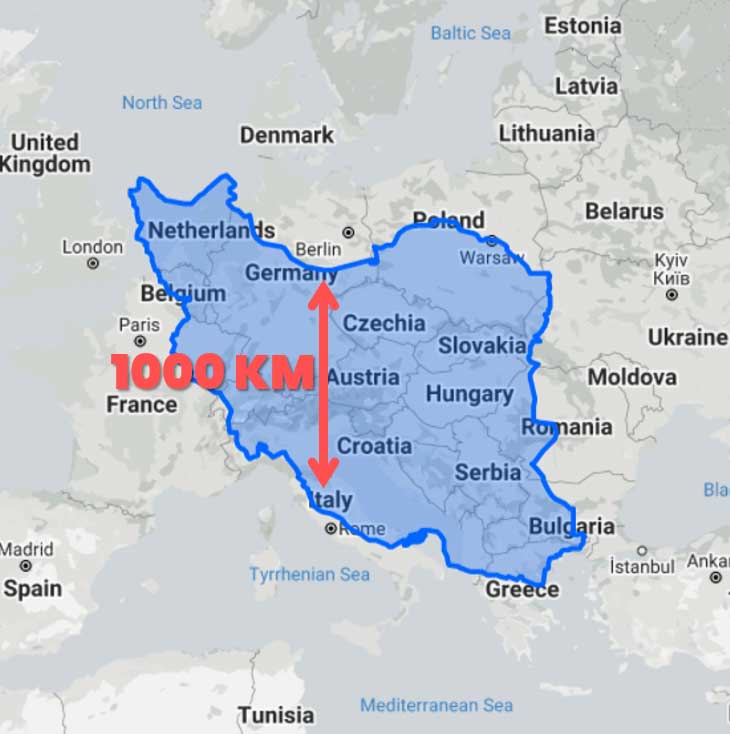
Now, to give you a sense of the size: Iran is about 1,000 kilometers from north to south. Yes! it’s huge. Almost as wide as all of Western Europe. Just think of the distance from Berlin to Rome — that’s about the same as crossing Iran from top to bottom. So, if you’re planning a quick 3-day trip, you need to skip a lot. With at least one week, and even more, you’ll just scratch the surface.
1-3) Iran Neighbours
Iran is surrounded by so many countries; Turkey, Armenia, Azerbaijan, Turkmenistan, Iraq, Afghanistan, Pakistan, and the Arab states across the Persian Gulf. This unique location is one of the reasons Iran is so diverse. You get different cultures, different ethnic groups, and even completely different landscapes, all in one country.
1-4) Iran Provinces & Cities
Now, take a closer look at the provinces. Each province has its own capital city. Sometimes the names match. like Isfahan in Isfahan Province. Easy, right? But sometimes they don’t. Like Shiraz, which is actually in Fars Province or Tabriz that is the capital of East Azarbaijan. Even more complicated! Kashan, which belongs to Isfahan Province, but it’s not the capital. Even though it has been a very important city and one of the main travel destinations between Tehran and Isfahan, that is worth a visit.
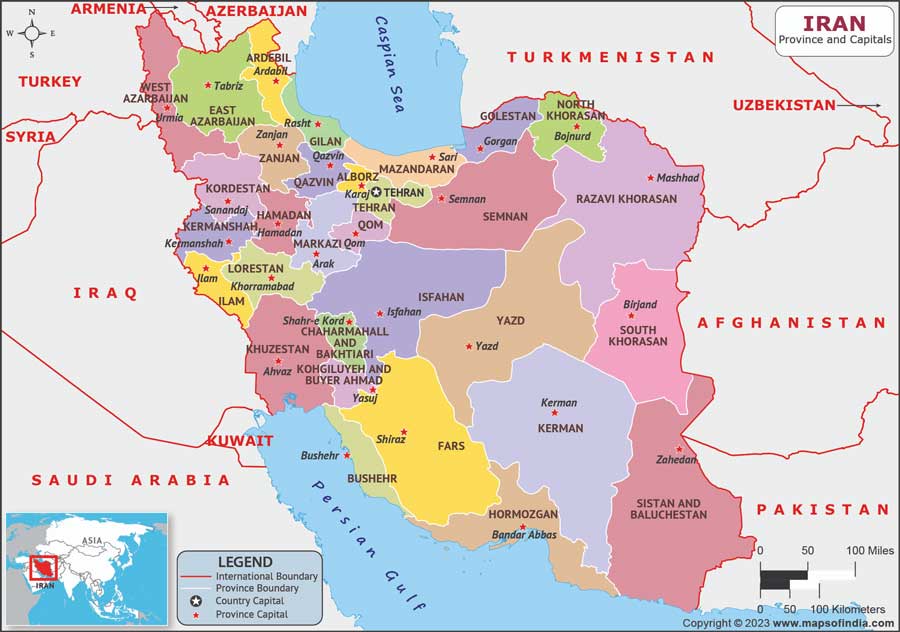
One of the frequently asked questions of Iran travelers is; ‘What are the biggest cities in Iran?’ We, in Persian Walk team, as an Iran tour operator, know it’s a very important question for everyone who is coming to Iran. Because Iran visitors have different traveling styles, and depending on their interests, they want to plan their Iran trip. Some people like the modern nightlife of Tehran [Huge & busy], while some people like the art in Isfahan [Big city with a taste of history & art] or the history in Shiraz [Including Persepolis outside], or some people looking for a quieter vibe to relax in traditional houses, Yazd or Kashan [Nice small towns] are perfect. So, a comprehensive knowledge of Iranian city sizes is crucial.
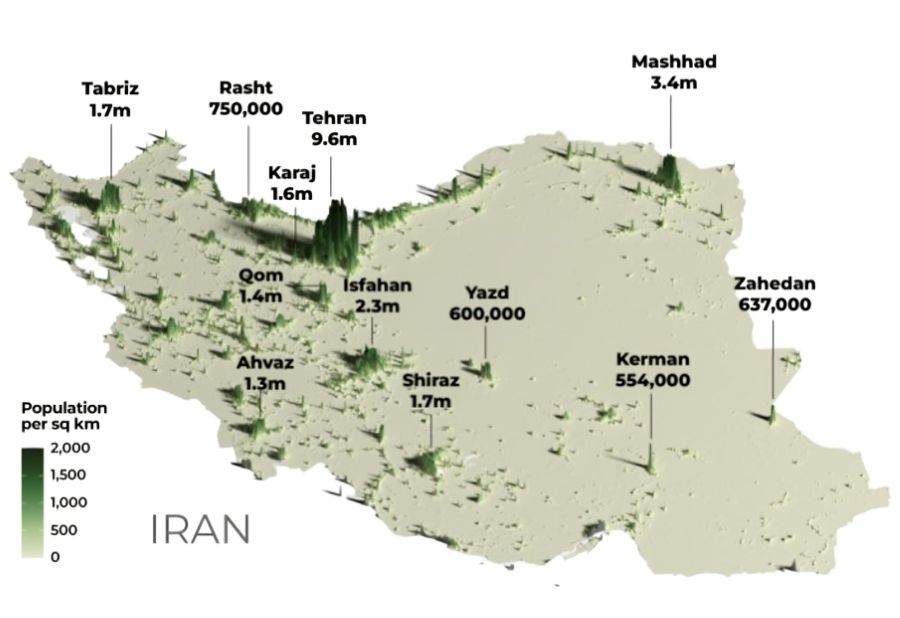
Well, Tehran, with a population of about 10 million, is giant; it’s super crowded, super busy, and the traffic is insane. Then you see Mashhad about 3.5 million, Isfahan 2.5 million, Tabriz and Shiraz 1.7 million. Refer to the map below to gain an idea about the population distribution of Iranian cities across different regions.
1-5) Topography of Iran
Now let’s zoom out to see a satellite view of Iran that has a lot to talk about. Up north, you see the Caspian Sea, surrounded by lush green forests and beaches that sit 28 meters below sea level. Down south, the beautiful Persian Gulf coastline opens the way to the oceans. Across the north, the Alborz Mountains stretch like a protective wall, with Mount Damavand [The highest peak in Iran]. Then there’s the Zagros Mountains, winding their way through the west and south. And of course, the deserts. The Lut Desert in the east [One of the hottest places on the planet] and the Dasht-e Kavir, the vast central desert. It’s this incredible variety of geography that makes traveling across Iran so unique.

Here’s something cool! The cities of Tehran, Isfahan, and Shiraz [All former capitals over the last 400 years] are right in the center of the country, nestled between mountain ranges. Nature basically designed a safe, strategic spot for them. Today, these cities are still at the heart of Iran’s tourism scene. So, if it’s your first trip, chances are you’ll be visiting at least one of them.”
2) Iran Climate & Best Season to Visit Iran
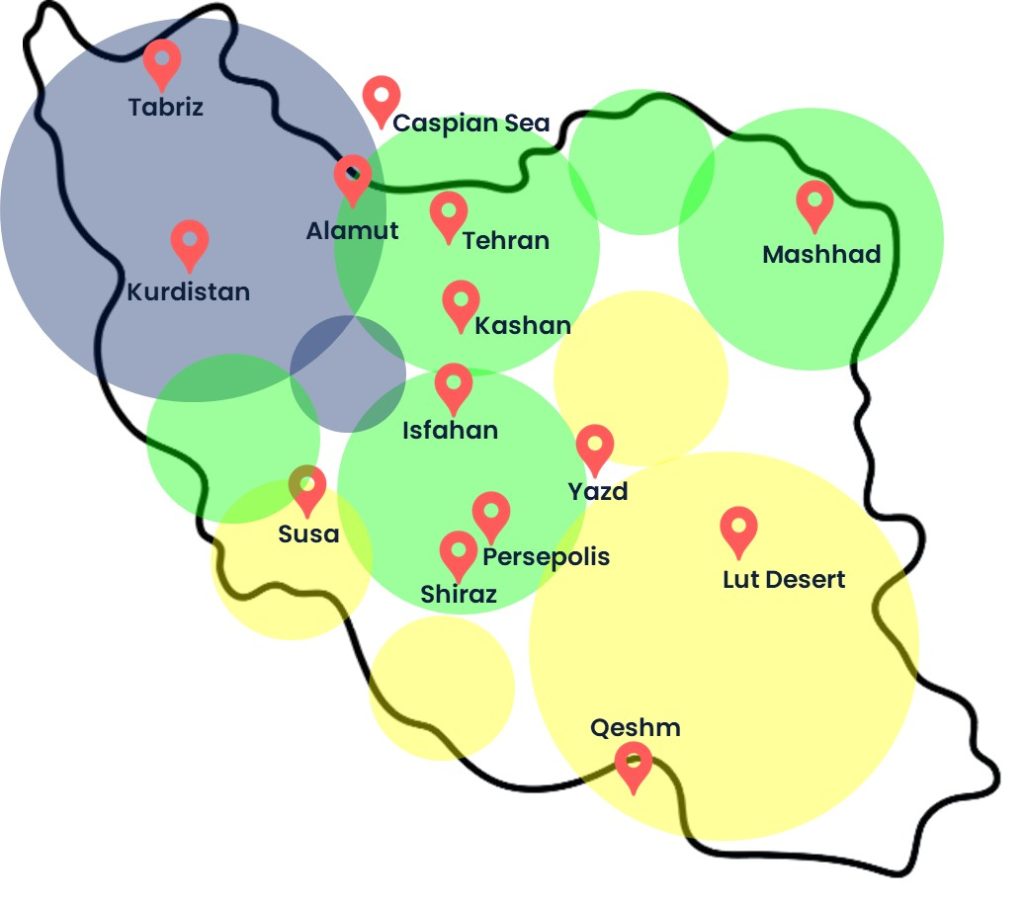
َAs we discussed above, Iran has a diverse geography, and as a result, its climate varies significantly from one region to another. To make this easier to understand, the map below simplifies Iran’s climate into three main zones, each represented by a different color. This visual approach helps travelers quickly identify the best regions to visit depending on the season.
2-1) Green Zones: Mild and Pleasant Climate
The green areas represent regions with generally mild and comfortable temperatures for most of the year. These areas include major cultural and historical destinations such as Tehran, Kashan, Isfahan, Shiraz, and Mashhad. Spring (March–May) and autumn (September–November) are the best times to visit these regions, offering pleasant weather for sightseeing, walking tours, and city exploration.
2-2) Blue Zones: Cold and Mountainous Regions
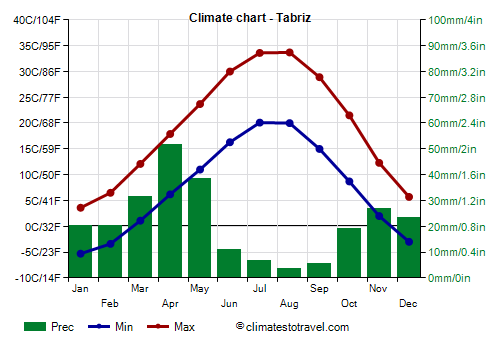
The blue zones indicate colder, mountainous areas, mainly in western and northwestern Iran, including regions around Tabriz and Kurdistan. These areas experience cold winters with snow, making them suitable for winter sports, while summers are cooler and ideal for travelers who prefer fresh mountain air. Late spring and summer are generally the best seasons to visit these regions.
2-3) Yellow Zones: Warm and Hot Climates
The yellow areas show Iran’s warm climate regions. Central Iran, including desert areas such as Yazd or the Lut Desert, is hot and dry, especially in summer. In contrast, southern regions near the Persian Gulf and islands like Qeshm have a hot and humid climate. These areas are best visited during late autumn, winter, and early spring, when temperatures are more comfortable.
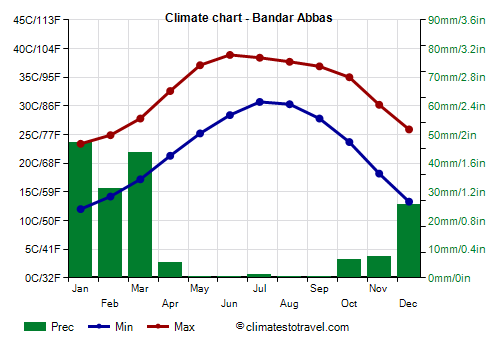
By understanding these three climate zones, travelers can plan their routes more effectively, choose the right season for each destination, and avoid extreme weather conditions. Rather than asking “When is the best time to visit Iran?”, a better question is “Which part of Iran, and in which season?”—and this map provides a clear answer at a glance.
Frequently Asked Question: Wy Iran is called 4-Season Country?
Thanks to its vast size, varied elevation, mountain ranges, deserts, and long coastlines, it is possible to experience winter, spring, summer, and autumn simultaneously within Iran. While snow may cover the mountains of the northwest, the southern Persian Gulf coast can have warm, beach-friendly weather, and central regions may remain dry and sunny. This unique climatic diversity allows travelers to choose destinations based on their preferred season, making Iran a year-round travel destination rather than a country limited to one ideal travel period.
3) Things to know About Iran Borders & Transportation
Before exploring Iran’s transportation system, it’s essential to understand how travelers can enter and exit Iran, as well as how to plan their arrival and departure efficiently. Iran is one of the few countries in the region that can be accessed by air, by land, and even by sea, offering flexibility for different travel styles and itineraries.
3-1) Iran Entry and Exit Options
For most international visitors, flying into and out of Iran is the most common and time-efficient option. However, overland border crossing routes can also be practical alternatives, especially for travelers planning multi-country journeys or regional routes. Choosing different entry and exit points allows travelers to design smarter itineraries, reduce backtracking, and make the most of their time in Iran.
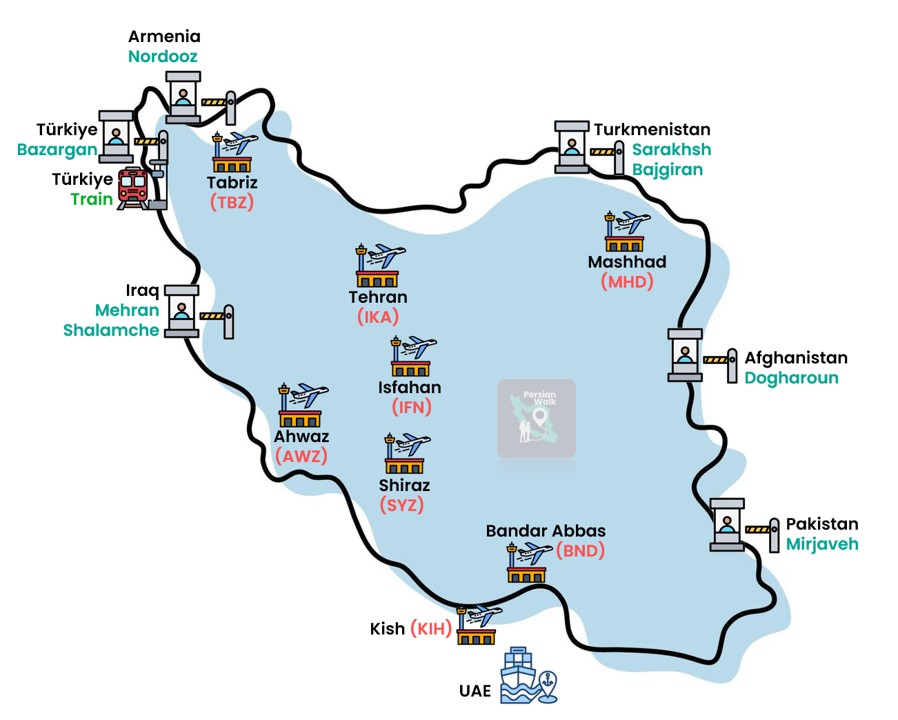
Imam Khomeini International Airport (IKA) in Tehran is the most common entry point to Iran, as the majority of international flights arrive here. For many travelers, entering Iran via Tehran is the most practical option. However, the best exit point depends on your itinerary. If your route includes southern destinations such as Shiraz, departing from Shiraz International Airport (SYZ) can be a smart choice. This allows you to avoid an unnecessary domestic flight or backtracking to Tehran, helping you save both time and travel costs.
Looking for a short trip to Isfahan and Shiraz from Duabi, Doha, Kuwait, Muscat, or even Istanbul?
- Enter from Shiraz International Airport (SYZ)
- Exit from Isfahan International Airport (IFN)
Other Airports like Mashhad International Airport (MHD) are also possible as Kevin explains his travel to Iran: International flight from Dubai to Mashhad → Mashhad → night train to Yazd → Shiraz → Isfahan → Kashan → Departure: international flight from Tehran
In addition to air travel, Iran also offers multiple land border entry and exit options, as well as ferry routes in the south. These alternatives have been used by experienced travelers such as Diana from The Globetrotting Detective, who entered Iran by land on different trips and traveled via southern ports and islands.

Trip 1: Tehran (IKA) → Kashan → Isfahan → Yazd → Kerman → Kalut Desert → Shiraz → Qeshm Island → Hormuz Island → Departure: Bandar Abbas → Dubai. She had planned to travel to Dubai by ferry from Bandar Abbas, but she gave up due to the high risk of cancellation caused by the weather, so she opted for an international flight from Bandar Abbas to Dubai instead.
Trip 2: Overland from Iraq → Iran (via Penjwen-Bashmaq Border)
Trip 3: Overland from Afghanistan → Iran (Herat → Mashhad by using shared taxi)
3-2) Iran Transportation System
Iran has a well-developed transportation network with good-quality roads. This allows travelers to move easily between cities and regions by bus or car. Intercity buses are affordable, frequent, and connect almost all destinations. For greater flexibility, especially on scenic or historical routes, private cars with drivers are commonly used.
Besides road trips, other options are available depending on distance, budget, and comfort. Domestic flights are the fastest way to travel between major cities. Almost every city in Iran has an airport for domestic flights.
Trains are a safe and comfortable way to travel on popular routes in Iran. Many travelers don’t know how to buy train tickets in Iran, especially first-time visitors. In this case, Iranian tour operators such as Persianwalk can easily help you book train tickets. Traveling by train is not only comfortable but also a unique way to experience Iran’s railway system.
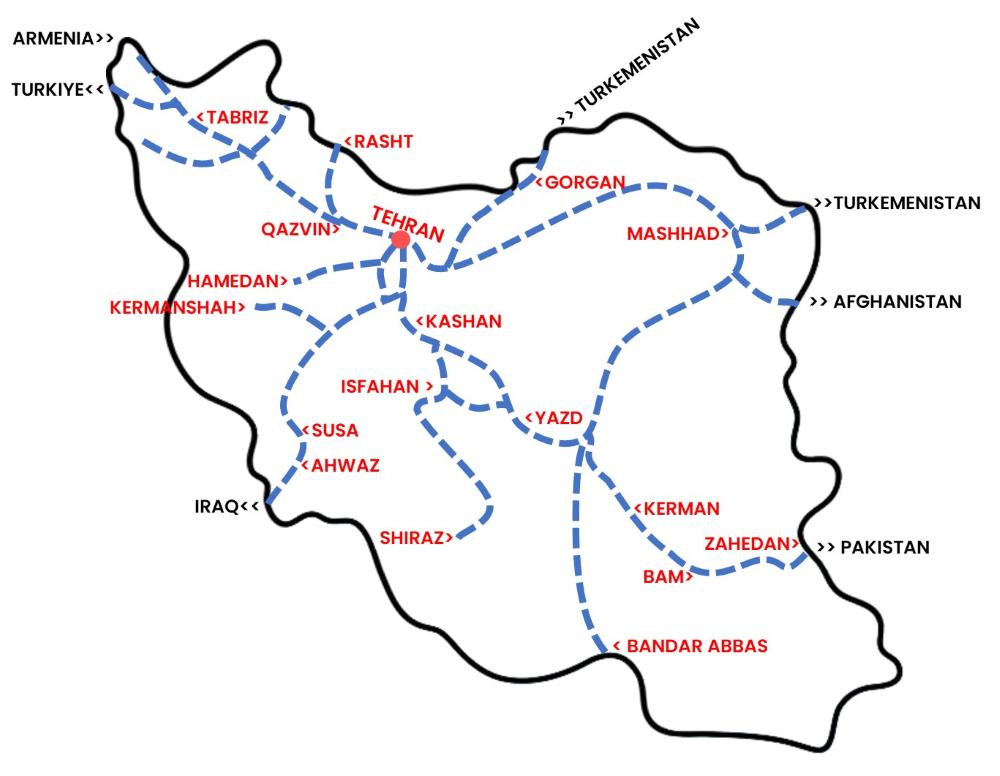
Knowing these options in advance helps first-time visitors plan efficient routes and travel more confidently in Iran. You can find the best options by contacting the Persian Walk team or submitting your request on the Iran Transportation System page.
4)Things to Know About Persian Food Before Traveling to Iran
Persian food is one of the most important things that travelers should know before stepping into the airport. It’s not as internationally famous as Turkish Food, not as spicy as Indian Food, and not as simple as Arabian food. It’s unique. So, in this section, we will talk about the main foodie things to know before traveling to Iran.
Rice vs. Bread
You can divide Persian food into two main groups: those eaten with rice and those served with bread. Bread lovers have plenty of options like Lavash, Sangak, and Barbari, often baked fresh in the morning and used for dips. But most Iranians are on Team Rice. It’s the heart of the table and appears in almost every meal.
Note: Before Trying Iranian Food, Read This blog “How to survive in Iran with Gluten and Lactose intolerance“
Rice in Iran isn’t just boiled. It’s carefully steamed to make it fluffy and light, with a golden crust called tahdig. Everyone fights over tahdig because it’s crispy and full of flavor. Iranian rice often comes with saffron, giving it that warm yellow color and unique aroma.
Dizi! The Classic Meal
One of the oldest Persian dishes is Dizi, also known as Abgoosht. It’s like a stew made with lamb, chickpeas, potatoes, and tomatoes. Cooking it is simple, but eating it takes some work. First, you pour out the broth in a separate bowl and sip it like soup, or dip bread into it. Then you mash the rest into a thick paste and eat it with bread. In fact, eating Dizi takes more work than cooking it.
Meet the Kebab Family
Kebabs are everywhere in Iran. The main ones are
- Koobideh (minced meat)
- Joojeh (grilled saffron chicken)
- Barg (thin slices of beef or lamb).
Besides the classics like Koobideh, Joojeh, and Barg, Iran has plenty of other delicious kebabs. There’s Chenje, which are juicy lamb chops; Bakhtiari, a mixed skewer of chicken and beef; Qhafghazi, a flavorful regional specialty; Soltani, a “king-size” combo of Barg and Koobideh; and Shishlik, grilled rib chops that are rich and meaty.
Rice Dishes and Stews
Iran grows its own rice, especially in the north near the Caspian Sea. Rice can be mixed with other ingredients. Some popular mixes are the vegetarian Adas Polo (with lentils and raisins) or Loobia Polo (with green beans and meat). Each region adds its own twist, but saffron is almost always part of the flavor.
Also, Rice and be served plain with kebab or stews. Persian stews are slow-cooked and full of herbs and spices. The big three are:
- Ghormeh Sabzi — green and herby, made with beans and dried lime.
- Fesenjoon — a mix of ground walnut and pomegranate; sweet and sour at once.
- Gheymeh — tomato-based with split peas and fried potatoes on top.
Eggplant Magic
Talking about Gheymeh, and just reminded that if you add some eggplant to Gheymeh, it gets 10x better. Eggplant is also the main ingredient in dishes like Mirza Ghasemi (smoky with garlic and egg) and Kashk-e Bademjoon (creamy with yogurt or whey).
Getting Hungry?! Let’s Go
Persian food is about patience and taste, not speed. It’s home-style cooking that connects people. Whether it’s a simple rice, a plate of kebab, or a stew with eggplant, every dish shows the same thing: good food takes time, and it’s meant to be shared.
To be continued!